<?xml version="1.0" encoding="utf-8"?>
<feed xmlns="http://www.w3.org/2005/Atom">
  <author>
    <name>Jared Faris</name>
  </author>
  <generator uri="https://hexo.io/">Hexo</generator>
  <id>https://jaredfaris.com/</id>
  <link href="https://jaredfaris.com/" rel="alternate"/>
  <link href="https://jaredfaris.com/atom.xml" rel="self"/>
  <rights>All rights reserved 2026, Jared Faris</rights>
  <subtitle>Software leader, consultant, and 100% nerd</subtitle>
  <title>Jared Faris</title>
  <updated>2026-10-16T21:50:09.034Z</updated>
  <entry>
    <author>
      <name>Jared Faris</name>
    </author>
    <category term="ai" scheme="https://jaredfaris.com/tags/ai/"/>
    <category term="recruiting" scheme="https://jaredfaris.com/tags/recruiting/"/>
    <category term="jobs" scheme="https://jaredfaris.com/tags/jobs/"/>
    <content>
      <![CDATA[<figure><img alt="" src="image-1.jpeg" /></figure><p>In May, <a target="_blank" rel="noopener" href="https://arstechnica.com/information-technology/2023/05/ibm-pauses-hiring-around-7800-roles-that-could-be-replaced-by-ai/">IBM announced a plan to slow hiring by roughly 7,800 jobs</a> that they anticipate can be replaced by AI. While IBM is a rare company to say the AI part out loud, I don’t think this is limited to just IBM.</p><p>The U.S. Bureau of Labor Statistics tracks <a target="_blank" rel="noopener" href="https://www.bls.gov/news.release/jolts.t01.htm">JOLTS</a> (the<em> Job Openings and Labor Turnover Survey) </em>which provides a snapshot of what has happened in the past. It doesn’t necessarily tell you why but I suspect that in their numbers a similar story is unfolding.</p><p>From March to April, job openings fell in the following sectors:</p><ul><li><strong>Information</strong>: down <strong>7000</strong> openings in the month, and <strong>100,000</strong> year over year</li><li><strong>Professional and business services</strong>: down <strong>57,000</strong> openings in the month, and <strong>561,000</strong> year over year</li></ul><p>There are other things happening in the economy of course but I think these numbers show an anticipation that a lot of previously necessary roles might not be so necessary anymore.</p><p>I called this trend out in <a href="/writing/business-actions-re-chatgpt-you-should-take-right-now/">April when I wrote</a>:</p><blockquote>“I<strong>f you are about to hire another person to expand an existing team in a creative or analytical role, pause.”</strong></blockquote><h3>Why pause on hiring?</h3><p>The rapid adoption of GPT, Bard, and Large Language Models (LLMs) in general has given a lot of high performing employees a power tool to make them more efficient and effective. I think the logical result of this is:</p><blockquote><strong>If you take high performing employees and make them even better, you don’t need as many of them.</strong></blockquote><h3>What does this mean for companies and job seekers?</h3><p>I think a lot of companies are going to find they can get the same or more work done with smaller teams over the next 6–12 months. This happens in a recession normally; cuts to staff get made, business adapts, and low value work that shouldn’t have been done anyway gets dropped.</p><p>What’s different this time is an external spike in productivity that a lot of people will see because of LLMs. As companies rebound, they might not need to hire back anyone to sustain growth. Knowledge workers who get laid off may find it’s very hard to find companies that need them for a long time.</p><p>I will not be surprised if the size of the average company is smaller next year than it is today. I bet some companies will be an order of magnitude smaller but producing the same value for their customers.</p><h3>What can you as a leader do?</h3><p>Yes! Like all technological improvements, we will see new roles get created but it’s going to take time to figure out. So what do you do as a leader today?</p><p>My recommendations:</p><ul><li>If you‘re thinking about hiring more people to expand current teams, pause. Encourage your people to use the new tolls available to become more efficient.</li><li>Think about your business: what things have gone from “time consuming and not worth the effort” to “fast, quick wins” if you’re using AI?</li><li>Prototype: make small investments of time and money to see if the economics are different. Invest in growth in areas you were ignoring before.</li></ul><p>The last bullet is the key. If you can use AI to your advantage you can grow your business, take care of your customers, and take care of your people. That’s going to take experimentation and you can’t afford to wait.</p><h3>Not sure where to get started?</h3><p>If your not sure what this means for your team, <a target="_blank" rel="noopener" href="https://www.linkedin.com/in/jaredfaris/">message me on LinkedIn</a>. I’d love to help you brainstorm how to take advantage of AI today to make your business stronger.</p>]]>
    </content>
    <id>https://jaredfaris.com/writing/should-ai-impact-your-open-roles/</id>
    <link href="https://jaredfaris.com/writing/should-ai-impact-your-open-roles/"/>
    <published>2023-06-21T01:26:17.000Z</published>
    <summary>IBM said out loud that it is slowing hiring for roles AI can replace. The job openings data suggests it is not alone. Here is how to think about your own open roles.</summary>
    <title>Should AI Impact Your Open Roles?</title>
    <updated>2026-10-16T21:50:09.034Z</updated>
  </entry>
  <entry>
    <author>
      <name>Jared Faris</name>
    </author>
    <category term="hiring" scheme="https://jaredfaris.com/tags/hiring/"/>
    <category term="ai" scheme="https://jaredfaris.com/tags/ai/"/>
    <category term="risk" scheme="https://jaredfaris.com/tags/risk/"/>
    <category term="chatgpt" scheme="https://jaredfaris.com/tags/chatgpt/"/>
    <category term="business-strategy" scheme="https://jaredfaris.com/tags/business-strategy/"/>
    <content>
      <![CDATA[<figure><img alt="" src="image-1.jpeg" /><figcaption>Deep thoughts about deep learning</figcaption></figure><p>If you’re in a leadership position the rapid rise of ChatGPT and similar tools means there are actions you need to take right now. This is another Google or iPhone moment. If you’re still in “wait and see mode” I hope this article nudges you out of it.</p><p><em>Housekeeping Note: This was going to be my 3rd and final post on the impact of GPT and other Large Language Models on technology and business. As I’ve dug deeper, I’ve realized there are still too many topics I want to discuss. Treat this as 3a and please consider reading my previous articles </em><a href="/writing/what-chatgpt-means-for-engineers-today/"><em>What ChatGPT Means for Engineers Today</em></a><em> and </em><a href="/writing/the-robots-arent-coming-for-the-testers/"><em>The Robots Aren’t Coming for the Testers</em></a><em>.</em></p><p>While I intend to explore the future business impacts, I see from these new AI tools, I think there are important things that business and technology leaders <strong>need to do right now</strong>. These are important to protect your business and customers and to set you up for success. <strong>Do not wait.</strong></p><h3>1) Set explicit information governance rules and train everyone, immediately</h3><p>This is first because I don’t think the average user of these new AI tools is thinking about security or privacy at all. <strong>ChatGPT is not a safe place to enter any of your important company or customer data.</strong></p><p>You don’t have a BAA with OpenAI to pass in HIPAA data. You don’t have an NDA where you can rely on them to not leak PII (personally identifiable information) about your customers. <strong>You absolutely must not give GPT any non-public customer info.</strong></p><p>It’s also not a smart place to pass in your key business strategies. The model may not use that as training data today, but I expect it will before long.</p><h4>Schedule an all hands call and discuss these points</h4><ol><li>It is never appropriate to give private information external AI. Giving PHI (protected health information) or PII to an external AI <strong>will open your company to lawsuits and may be a terminable offense.</strong></li><li>It is appropriate to use AI as an alternative to search engines, but it’s never appropriate to blindly trust the results for decision making<br>Current AIs make confident and reasonable sounding mistake. The AI equivalent of SEO to tamper with results is already being explored.</li><li><strong>No code generated from AI should be run</strong> without a programmer reviewing it. We haven’t heard about GPT injection attacks yet but <strong>I bet we will within 3–6 months.</strong></li></ol><p>Talk about this in your 1:1s too. Things are moving fast and you <strong>should not expect all your employees to know what’s happening</strong>.</p><p>Nobody should get to skip the training, not even executives. In my experience, executives can be as guilty (or more so) as anyone else at falling to phishing scams. I think AI data leakage will be similar.</p><h3>2) Train every employee and enable them to experiment</h3><p>Now that the scary part is over, I suggest you also start training your employees on the basic uses of ChatGPT and building AI prompts soon. If you haven’t experimented yourself, I recommend you do so.</p><p>Ask your team members if any of them have used it and promise they won’t be in trouble. Anyone who has used it heavily for a week or two can likely do a basic intro training on how the ChatGPT works. Use that person as a seed of knowledge in your company and carefully go over point 1 with them.</p><p>ChatGPT has replaced Google for half of my searches now and it’s sped up almost everything I do at my computer. If you don’t have anyone on your team who can do this training, leave me a private note (see above) and I’ll be happy to help.</p><p><em>Not sure how to leave a private note? Highlighting any text in this article and click the speech bubble button you’ll see pop up. Please include your email address so I can follow up!</em></p><h3>3) Reconsider and slow your hiring plans</h3><p>I expect this to be contentious but here goes: <strong>if you are about to hire another person to expand an existing team in a creative or analytical role, pause. </strong>If you desperately need to hire someone, do it, but if a team of people is at or near their capacity to do work, they might not be for long.</p><p>The efficiency gains from using GPT and the LLMs that will be in the market soon are huge. Imagine hiring more typists and copy editors and then having someone give you Microsoft Word or Google Docs. Or imagine hiring a few librarians/archivists and then being handed Google and Wikipedia.</p><p>I don’t think AI will take all our jobs but I do think we’re going to see a major and messy shift of priorities. You don’t want to hire someone who becomes redundant in two weeks. Pause, think through the impact to your business if every employee working on a computer gets 25–50% more effective this year. If the answer is still “we need to hire more” then do it!</p><h3>Wrapping Up</h3><p>I want to get back to deeper thoughts about the impact that GPT and other LLMs will have on business but the more I thought about the risks of data leakage, the more I thought an immediate and tactical post was in order.</p><p>If you appreciate these articles, please like them and follow me on Medium. Thank you!</p>]]>
    </content>
    <id>https://jaredfaris.com/writing/business-actions-re-chatgpt-you-should-take-right-now/</id>
    <link href="https://jaredfaris.com/writing/business-actions-re-chatgpt-you-should-take-right-now/"/>
    <published>2023-04-22T03:36:39.000Z</published>
    <summary>If you are in a leadership position, the rapid rise of ChatGPT and similar tools means there are actions you need to take right now, starting with information governance.</summary>
    <title>Business Actions Re: ChatGPT You Should Take Right Now</title>
    <updated>2026-10-16T21:50:09.031Z</updated>
  </entry>
  <entry>
    <author>
      <name>Jared Faris</name>
    </author>
    <category term="GPT" scheme="https://jaredfaris.com/tags/gpt/"/>
    <category term="ChatGPT" scheme="https://jaredfaris.com/tags/chatgpt/"/>
    <category term="LLM" scheme="https://jaredfaris.com/tags/llm/"/>
    <category term="AI" scheme="https://jaredfaris.com/tags/ai/"/>
    <category term="Testing" scheme="https://jaredfaris.com/tags/testing/"/>
    <content>
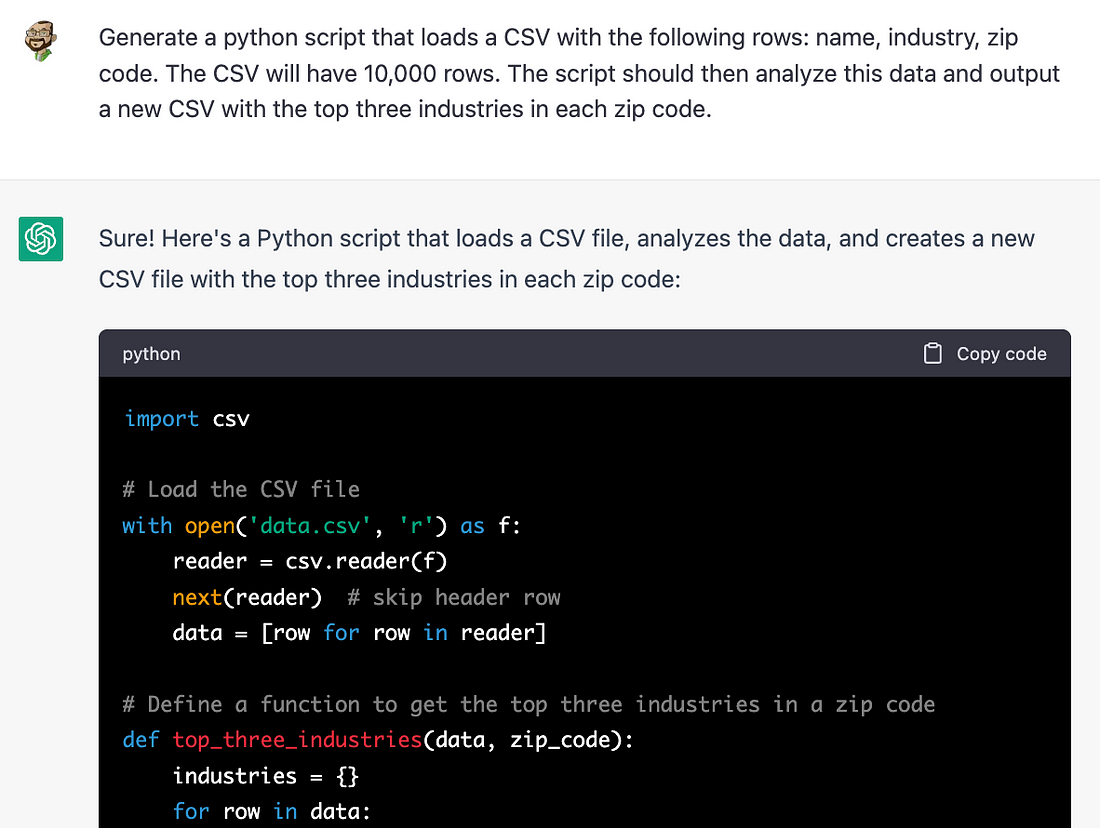
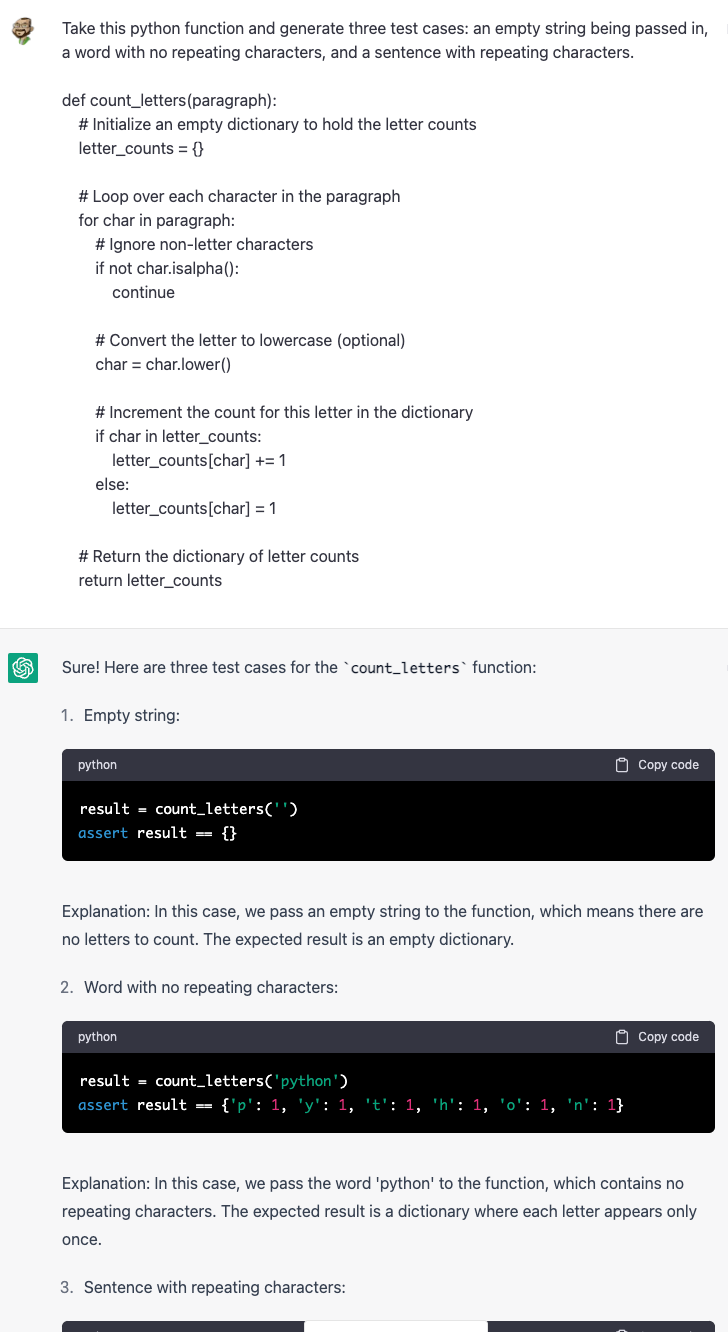
      <![CDATA[<div class="center"><figure><img src="/writing/the-robots-arent-coming-for-the-testers/scientist-measuring.webp" class="" title="DALL-E had trouble with Robot Testing"></figure></div><p>ChatGPT is already replacing jobs and information workers have real reasons to be worried. This week I discuss why I don’t think QA and Testing jobs will be replaced. Changed certainly, but not replaced.</p><p>If you haven’t <a href="/writing/what-chatgpt-means-for-engineers-today/">read my initial thoughts on the impact of Large Language Models to engineering</a>, I suggest you start there since this post builds on those thoughts. My thoughts here are not as fully formed because things are rapidly changing in our industry and I’m learning more daily.</p><p>I hope this sparks some new ideas for you and if it does, I’d love to chat about them!</p><h2 id="Last-week-I-made-three-bets"><a href="#Last-week-I-made-three-bets" class="headerlink" title="Last week I made three bets"></a>Last week I made three bets</h2><ol><li><strong>LLMs will quickly become the normal starting place for development teams</strong> starting a new project. Within 2 years engineers won’t think twice about using them, just like Google or StackOverflow now.</li><li><strong>Lead engineers &#x2F; architects become more valuable</strong> to a team but their roles will change. They’ll still have to set the technical strategy but they’ll spend more time reviewing the work of more junior team members to make sure it fits the strategy.</li><li><strong>The ratio of Engineering to QA moves meaningfully to QA in the next 18 months;</strong> maybe 25–30% more QA. This might mean hiring more specialists, or it might mean your existing team shifts their priorities.</li></ol><p>All three bets are different angles of the same theory:</p><blockquote><p>Software is about to be a lot cheaper, easier, and faster to produce in bulk. Without guardrails, it will also be much poorer quality.</p></blockquote><h2 id="Implications-of-this-to-business"><a href="#Implications-of-this-to-business" class="headerlink" title="Implications of this to business"></a>Implications of this to business</h2><p>If software is cheaper, easier, and faster to build there are a few implications:</p><h3 id="Businesses-will-solve-more-problems-with-software"><a href="#Businesses-will-solve-more-problems-with-software" class="headerlink" title="Businesses will solve more problems with software"></a>Businesses will solve more problems with software</h3><p>It will be possible to solve problems that were too expensive or complicated to solve before. Many of these will be small internal efficiency gains but enough small gains add up to huge impacts on the bottom line. This feels similar to the gains made optimizing a lot of little steps in an assembly line.</p><p>Some of these will be much bigger things that a traditional software engineering team would be relevant but that were too much to tackle before with the team at hand. We’ll come back to this in a second on 3).</p><h3 id="Less-experienced-developers-or-even-non-developers-will-do-a-lot-of-new-work-outside-of-traditional-tech-teams"><a href="#Less-experienced-developers-or-even-non-developers-will-do-a-lot-of-new-work-outside-of-traditional-tech-teams" class="headerlink" title="Less experienced developers or even non-developers will do a lot of new work outside of traditional tech teams"></a>Less experienced developers or even non-developers will do a lot of new work outside of traditional tech teams</h3><p>This has always been happening. I didn’t find a current number but in 2015 <a target="_blank" rel="noopener" href="https://www.microsoft.com/en-us/investor/events/FY-2015/morgan-stanley-qi-lu.aspx?EventID=156417">Microsoft said 1.1 billion people used their productivity tools including Excel</a>. I bet the Google numbers are similar.</p><p>Now imagine a world where someone can ask ChatGPT to generate Python code to analyze data for them.</p><p>Actually, don’t imagine it. You can just ask ChatGPT.</p><p><em>(Note: I didn’t run this code but I have done similar experiments where I actually did and it was pretty close to working with a few minor changes)</em></p><div class="center"><figure><img src="/writing/the-robots-arent-coming-for-the-testers/gpt-example.png" class="" title="GPT generating code that a nontechnical user could use."></figure></div><h3 id="Expectations-of-traditional-tech-teams-will-increase"><a href="#Expectations-of-traditional-tech-teams-will-increase" class="headerlink" title="Expectations of traditional tech teams will increase"></a>Expectations of traditional tech teams will increase</h3><p>The ability to ask ChatGPT for code won’t be limited to business users. Engineering teams will do the same things and integrate this code into <strong>public facing, mission critical apps</strong> where security, performance and reliability are critical.</p><p>Businesses won’t be happy only applying the efficiency gains we talked about above to small internal things. They’ll demand to see their big showcase software accelerate too.</p><p><strong>Bet: Once executives see accounting or marketing get huge efficiency gains from using LLMs they’ll demand their highly compensated engineering teams do the same. They’ll be right to do so.</strong></p><h3 id="The-quality-of-all-of-this-software-is-going-to-be-poor"><a href="#The-quality-of-all-of-this-software-is-going-to-be-poor" class="headerlink" title="The quality of all of this software is going to be poor"></a>The quality of all of this software is going to be poor</h3><p>While professional software engineering artisans still produce bugs, we assume some level of inherent quality in the individual components they create. The most nuanced bugs are usually found when each piece of craftwork has to plug into a bigger system.</p><p>If the same software engineers are now producing 2x (or more!) code, how are they going to maintain any level of quality?</p><p>Now remove the artisan from the system whom we count on for some automatic level of quality and security and hand the tools to people with other skill sets. Then crank out 5x or 10x as much software. You can probably see where this is going.</p><h2 id="What-does-this-mean-for-Quality-Assurance-and-Testing-roles"><a href="#What-does-this-mean-for-Quality-Assurance-and-Testing-roles" class="headerlink" title="What does this mean for Quality Assurance and Testing roles?"></a>What does this mean for Quality Assurance and Testing roles?</h2><p>I think there are two dimensions where things will change for people in quality focused roles.</p><h3 id="A-lot-more-automated-testing-is-going-to-be-needed"><a href="#A-lot-more-automated-testing-is-going-to-be-needed" class="headerlink" title="A lot more automated testing is going to be needed"></a>A lot more automated testing is going to be needed</h3><p>Manual testing doesn’t scale well as teams grow today and it will scale even more poorly with GPT-driven development. Ideally, engineers will wrap their code with unit tests but more code means more regressions across a complicated system.</p><p>A lot of teams already use some combination of engineer-written tests and automated testers. Whatever the strategy here, the amount of testing will need to increase. A lot of teams will try to solve this by hiring more testers.</p><p>GPT can help with automated tests so the pool of people who can be an automated tester today just increased. You can ask GPT to write tests as easily as you can ask it to write code. This will be a huge help to anyone approaching testing from a less technical background.</p><div class="center"><figure><img src="/writing/the-robots-arent-coming-for-the-testers/gpt-example2.png" class="" title="GPT generating unit tests too"></figure></div><h3 id="A-Quality-Strategy-will-be-critical"><a href="#A-Quality-Strategy-will-be-critical" class="headerlink" title="A Quality Strategy will be critical"></a>A Quality Strategy will be critical</h3><p>It will be difficult to test everything, all of the time. In particular, it will be impossible to test the code being generated inside of business departments and outside of standard development processes.</p><p>Quality and Engineering leadership will <strong>need to have defined, published, and enforced architectural and quality strategy</strong> that everyone buys into. This strategy needs to describe how systems integrate, how software boundaries (where testing can easily occur) are defined, and what can and can’t integrate with critical systems.</p><blockquote><p>Bet: Quality Assurance teams in software become more like QA on an assembly line.</p></blockquote><p>They might not test everything but they will sample systems as they evolve and compare them to the strategy. When issues are found, they’ll work to improve processes to prevent that issue again.</p><p>I think these quality experts will have to partner with power users in the business to try to instill the same quality principles that are mandated in engineering. They will definitely need to police the boundaries to make sure nothing flows into mission critical systems that don’t follow quality practices.</p><h3 id="For-mission-critical-software-more-QA-people-will-be-needed"><a href="#For-mission-critical-software-more-QA-people-will-be-needed" class="headerlink" title="For mission critical software, more QA people will be needed"></a>For mission critical software, more QA people will be needed</h3><p>For internal software this might not be the case, but for customer facing software (particularly with any sensitive data or in regulated industries) more QA people will be needed.</p><p><strong>Software complexity and risk don’t scale linearly with lines of code</strong>. More code produces more complex interactions between units of code, and the surface area for defects <strong>increases exponentially</strong>.</p><blockquote><p>Bet: Software teams will see more and more costly defects when they start using LLMs to accelerate their work. Many teams will respond by hiring more testers.</p></blockquote><p>I don’t have a fully formed view of how this will work but I think we’ll also see a need for expanded and different quality teams on SaaS products and in regulated enterprises like healthcare or finance. These expanded quality teams will combine traditional testing with security and compliance awareness.</p><blockquote><p>Bet: In the next couple of years we’ll hear of an entirely new role inside of software teams that’s the evolution of Quality Assurance.</p></blockquote><p>I don’t know what this is, but I hope it’s not another terrible evolution of the AbbreviateEverythingOps naming convention like DevSecTestOps.</p><h2 id="What’s-next"><a href="#What’s-next" class="headerlink" title="What’s next?"></a>What’s next?</h2><p>I expect to come back to the topic of GPT and other LLMs on Quality in the future when I’ve had more time to reflect.</p><p>Next week however, I want to dive deeper into the business impacts of this tech. I’ll touch on how I think executives should be thinking about how LLMs will eventually impact their businesses and what they should be doing right now to prepare.</p>]]>
    </content>
    <id>https://jaredfaris.com/writing/the-robots-arent-coming-for-the-testers/</id>
    <link href="https://jaredfaris.com/writing/the-robots-arent-coming-for-the-testers/"/>
    <published>2023-04-11T18:00:00.000Z</published>
    <summary>
      <![CDATA[<div class="center"><figure><img src="/writing/the-robots-arent-coming-for-the-testers/scientist-measuring.webp" class="" title="DALL-E had]]>
    </summary>
    <title>The Robots Aren't Coming for the Testers</title>
    <updated>2026-10-16T21:50:09.035Z</updated>
  </entry>
  <entry>
    <author>
      <name>Jared Faris</name>
    </author>
    <category term="GPT" scheme="https://jaredfaris.com/tags/gpt/"/>
    <category term="ChatGPT" scheme="https://jaredfaris.com/tags/chatgpt/"/>
    <category term="AI" scheme="https://jaredfaris.com/tags/ai/"/>
    <category term="Engineering" scheme="https://jaredfaris.com/tags/engineering/"/>
    <content>
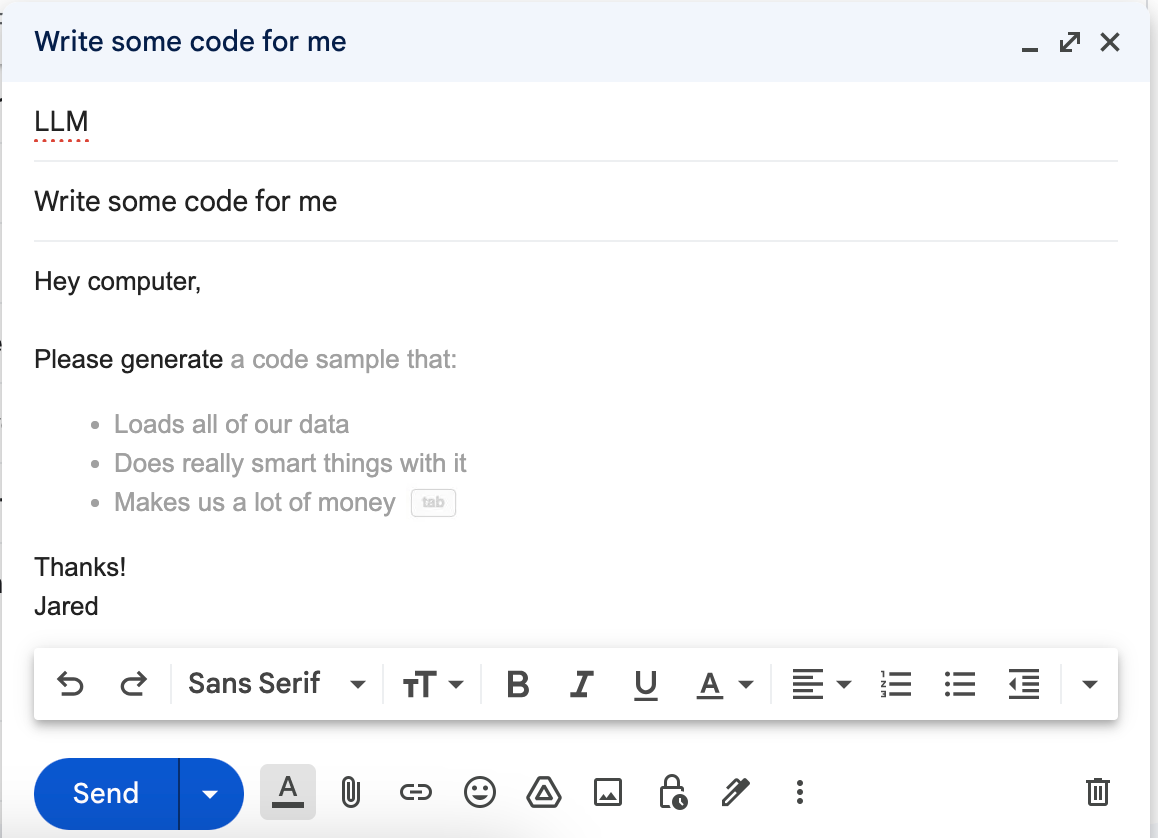
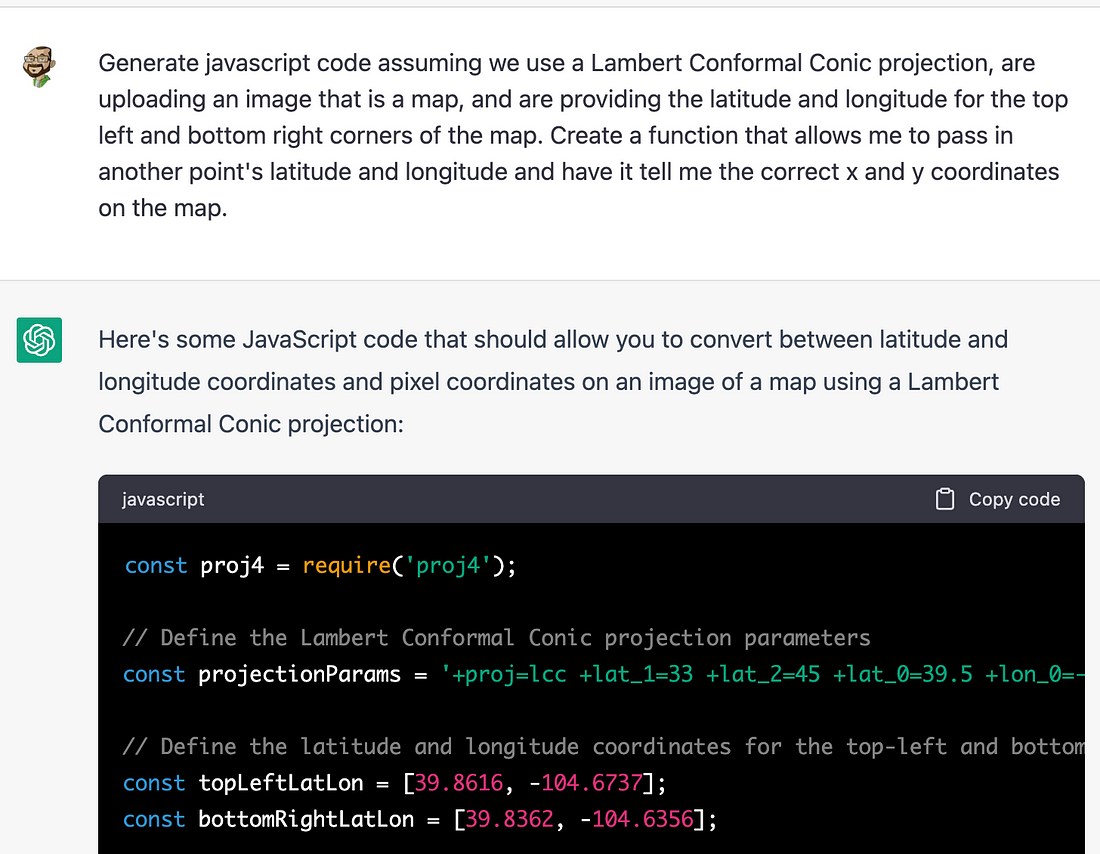
      <![CDATA[<div class="center"><figure><img src="/writing/what-chatgpt-means-for-engineers-today/header-image.png" class="" title="A really old marketing photo of an early microwave saying Make the greatest cooking discovery since fire. Cooking is crossed out and GPT is added."></figure></div><p>ChatGPT is an amazing new tool that promises to help engineering teams do everything faster. But like using a microwave to make Thanksgiving dinner, faster is no guarantee of better.</p><h2 id="What-is-ChatGPT-really"><a href="#What-is-ChatGPT-really" class="headerlink" title="What is ChatGPT really?"></a>What is ChatGPT really?</h2><p>Large Language Models (LLMs) like GPT are powerful text generation tools; you can think of them as really advanced autocomplete. They’ve seen millions of patterns. Most of the work a team does is not completely revolutionary, and they can usually find something that matches.</p><p>ChatGPT is a chatbot layered on top of GPT. It’s a human user experience for a complex piece of technology.</p><p>There are already specifically trained tools like GitHub’s Copilot (which is based on GPT’s tech) that are focused on matching the code it’s been trained on with what engineers are writing. ChatGPT is a more general text completion tool or “stochastic parrot” but it does its job well. Specialty tools like Copilot do similar things but embed closer to the developer experience. I expect to see many competing products in 2023.</p><p>None of these LLMs are new brilliant general AIs. They won’t solve your business problems or innovate something completely new. None of them are autocomplete for your business strategy.</p><div class="center"><figure><img src="/writing/what-chatgpt-means-for-engineers-today/llm-email.png" class="" title="A fake screenshot of gmail implying it can write the whole email out."></figure></div><p>The hyperbole today is that LLMs are “changing everything”. I think this is true, but not in the “telegraph ended the Pony Express in 18 months” sense. Engineering isn’t going away.</p><p>This changes everything today in the “Google made it possible to find code on the internet” way that instantly made every developer twice as effective. This is another step in the evolution of engineers gaining knowledge that went from expensive and huge books about software languages to using the internet.</p><h2 id="What-does-this-imply-about-engineering-speed"><a href="#What-does-this-imply-about-engineering-speed" class="headerlink" title="What does this imply about engineering speed?"></a>What does this imply about engineering speed?</h2><p>Let’s take a simplified model of software engineering and say there are two basic modes of work:</p><ul><li><strong>Mode 1</strong> — Tactical delivery: deciding on how to implement features, figuring out how to use libraries and 3rd party tools, deciphering bugs, and actually writing code.</li><li><strong>Mode 2</strong> — Strategic decision making: identifying product features that need built, technical investments that need to be made, and architecture and software patterns that need to evolve.</li></ul><h3 id="Mode-1-—-Tactical-Delivery"><a href="#Mode-1-—-Tactical-Delivery" class="headerlink" title="Mode 1 — Tactical Delivery"></a>Mode 1 — Tactical Delivery</h3><p>In Mode 1, LLMs are useful for generating boilerplate code (i.e. structural code that’s necessary but doesn’t have business value) and for exploring technology or patterns developers aren’t familiar with.</p><p>Most of the examples being talked about are boilerplate. <strong>The actual value is not here.</strong></p><p>The real value in Mode 1 is for giving engineering a head start on complicated technical tasks. When working on complicated work, engineers can spend hours or even days exploring a concept before they get close to writing the first line of useful code. LLMs can short circuit that.</p><p>Here’s an example of me exploring code to work with maps and plotting. I’ve never worked with projections (i.e. how we flatten the roundish Earth to flat images) and would have no idea where to start. ChatGPT gave me a starting point that did a few things:</p><ul><li>Told me about a 3rd party library “proj4” that I’d never heard of</li><li>Gave me a starting point for arcane configuration variables I’d have to figure out</li><li>Gave me actual code I could then start to modify</li></ul><div class="center"><figure><img src="/writing/what-chatgpt-means-for-engineers-today/gpt-example.png" class="" title="A real example of me asking GPT for code to do lat&#x2F;long calculations"></figure></div><p>ChatGPT is surprisingly good at telling you why it did something. You can ask it why it used a library, or ask it where a bug is likely going to happen. I’ve found that for routine tasks it does a good job telling you why and not just what, if you ask.</p><p><strong>My bet — LLMs will quickly become the normal starting place for development teams starting a new project. Within 18 months engineers won’t think twice about using them, just like Google or StackOverflow now.</strong></p><h3 id="Mode-2-—-Strategy"><a href="#Mode-2-—-Strategy" class="headerlink" title="Mode 2 — Strategy"></a>Mode 2 — Strategy</h3><p>Mode 2 is harder to predict and a little different. GPT is already pretty good at laying out how you’d solve a specific problem but it’s not great at suggesting how to make decisions that will set you up for success 6&#x2F;12&#x2F;18 months from now.</p><p>This kind of information is probably not heavily represented in the training data because most companies don’t publish their strategy. It’s also highly unique to each team.</p><p><strong>My bet — Lead engineers &#x2F; architects become more valuable to a team but their roles will change. They’ll still have to set the technical strategy but they’ll spend more time reviewing the work of more junior team members to make sure it fits the strategy.</strong></p><p>It’s unclear to me if this means team’s will need more senior people and become barbell shaped (lots of seniors, few mids, lots of juniors) or stay pyramid shaped.</p><h3 id="So-what-about-quality"><a href="#So-what-about-quality" class="headerlink" title="So what about quality?"></a>So what about quality?</h3><p>Quality is going to take a hit and testing post-development is going to be even more important than it already is.</p><p>Why? None of the code ChatGPT gives you went through the normal learning cycle of engineering:</p><ul><li>Engineer has an idea and writes code; that code fails</li><li>Engineer learns from the failure and modifies the code, learning more about how it works along the way (repeat many times)</li><li>Engineer has deep knowledge about how the code works and where likely failure points still are</li><li>Code is ready for explicit testing</li></ul><p>None of it is test-driven where the rules for how the code should (and shouldn’t) work are defined ahead of time. Engineers may not fully understand the inner workings of their code. In my example above, I have zero idea what the “projectionParameters” really mean. If they work, I probably won’t go figure it out either.</p><p>For internal projects, particularly small one off projects to serve a specific business function, this probably doesn’t matter at all. The ability to solve these projects just got much faster and cheaper.</p><p>For external projects and anywhere security, data integrity, and reliability are key, the need for QA just expanded. This code needs to be treated as untrustworthy until it’s heavily exercised by people trying to break it.</p><p><strong>My bet — The ratio of Engineering to QA moves meaningfully to QA in the next 18 months; maybe 25–30% more QA. This might mean hiring more specialists, or it might mean your existing team shifts their priorities.</strong></p><h2 id="What’s-next"><a href="#What’s-next" class="headerlink" title="What’s next"></a>What’s next</h2><p>Next week I’ll write more on how LLMs will empower QA professionals and anyone testing code. In particular they will make automated testing cheaper and feaster.</p><p>After that, I’ll write about how a business leader should think about balancing speed and risk. I’ll also talk about how you can start future proofing your team to use tools like Copilot and ChatGPT.</p>]]>
    </content>
    <id>https://jaredfaris.com/writing/what-chatgpt-means-for-engineers-today/</id>
    <link href="https://jaredfaris.com/writing/what-chatgpt-means-for-engineers-today/"/>
    <published>2023-04-04T18:00:00.000Z</published>
    <summary>
      <![CDATA[<div class="center"><figure><img src="/writing/what-chatgpt-means-for-engineers-today/header-image.png" class="" title="A really old marketi]]>
    </summary>
    <title>What ChatGPT Means for Engineers Today</title>
    <updated>2026-10-16T21:50:09.036Z</updated>
  </entry>
  <entry>
    <author>
      <name>Jared Faris</name>
    </author>
    <category term="home renovation" scheme="https://jaredfaris.com/tags/home-renovation/"/>
    <category term="home office" scheme="https://jaredfaris.com/tags/home-office/"/>
    <category term="tools" scheme="https://jaredfaris.com/tags/tools/"/>
    <content>
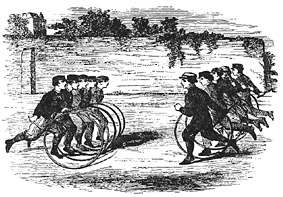
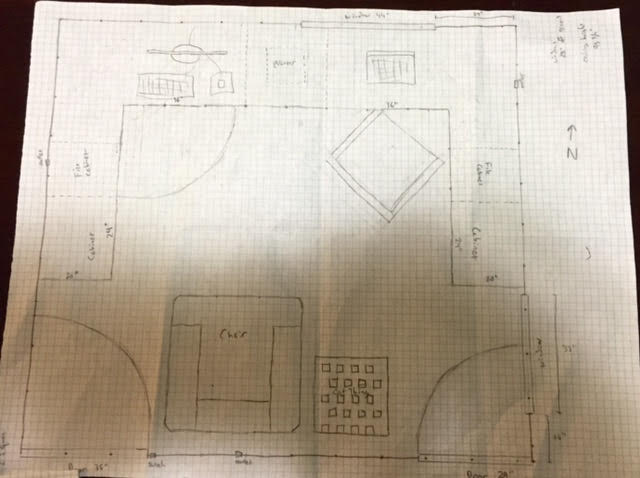
      <![CDATA[<p><em>A few people were foolish enough to respond to my tweet about my office remodel so I thought perhaps I should start blogging about it. It’s very much a work in progress, but I intend to update this as I go.</em></p><h2 id="History"><a href="#History" class="headerlink" title="History"></a>History</h2><p>Our house was built in 1947. Apparently, folks in 1947 didn’t think about home offices, standing desks, or video game playing. I’m not sure what they were up to in their free time…</p><div class="center">    <img src="/writing/office-renovation-part-1/hoop-game.jpg" alt="Old timey game of rolling a hoop"></div><p>Since then, our office has likely been a bedroom for people of various ages based on the paint colors (orange, blue, white, dark grey) that I found. As an aside, none of these people appeared to be particularly good at painting clean edges. Or not getting splotches on the ceiling.</p><h2 id="Now"><a href="#Now" class="headerlink" title="Now"></a>Now</h2><p>I want a nice home office to <strike>play video games in</strike> occasionally work out of, and want to replace the random bits of furniture in the room. Because the room is small, a set of desks built into the wall seem to be the best option. Thankfully, there are a lot of great ideas on the web. After browsing a while, I decided that some built in desks with shelving would be perfect. Here’s an example:</p><div class="center">    <img src="/writing/office-renovation-part-1/built-in-desk.jpg" alt="Desk built into a wall of shelves"></div><p>My plan is not to build this as one giant cabinet, but the idea of desks and storage space make a lot of sense.</p><h2 id="Design"><a href="#Design" class="headerlink" title="Design"></a>Design</h2><p>The first step was to draw up some designs on some trusty graph paper. As I’m <em>sure</em> you already realize, there is no replacement for drawing things to scale. In this case, every square was 2 inches. This was extremely helpful for figuring out what could even fit in the space.</p><div class="center">    <img src="/writing/office-renovation-part-1/desk-drawing-1.jpg" alt="Pencil sketch of an office layout on graph paper">    _Sorry for the poor image quality!_</div><p>My goal in the layout was to give us both traditional desk areas, give me space (over the laser printer) to have a standing desk, and leave enough room for a comfy chair next to an Ikea side table I hacked years ago to hold our cat’s food.</p><p>I redrew these plans at least 3 or 4 times. I will likely modify them again before we’re finished. Yay pencils and erasers!</p><p>The current design involves 24” deep desks along the main wall with 18-20” desk depth along the sides. This should give us space to spread out our stuff while still having room to move around.</p><h2 id="Approach"><a href="#Approach" class="headerlink" title="Approach"></a>Approach</h2><p>I want my office to be usable as soon as possible so I don’t want to wait for it to be totally finished before we move back in. As part of that, I intend to build it out in phases:</p><ol><li><strike>Strip out everything from the office</strike> <strong>Done</strong></li><li><strike>Prime the walls</strike></li><li>Paint the walls</li><li>Build the cabinets supporting the desk</li><li>Add the desk</li><li>Add the tall wall cabinets</li><li>Add the extra shelving</li></ol><p>I’m done with 1 and 2, and working on 4. 3 will start shortly.</p><div class="center">    <img src="/writing/office-renovation-part-1/primed-walls.jpg" alt="Freshly primed walls"></div><p>I’m planning on building frame-less (aka European) styles cabinets. I found a great writeup <a target="_blank" rel="noopener" href="http://tombuildsstuff.blogspot.com/2013/06/how-to-build-frameless-base-cabinets.html">here that you should check out</a>. I actually started making the first cabinet tonight, but I don’t have any photos to share yet.</p><p>Stay tuned for more!</p><p class="edit-note">Lightly edited in 2026.</p>]]>
    </content>
    <id>https://jaredfaris.com/writing/office-renovation-part-1/</id>
    <link href="https://jaredfaris.com/writing/office-renovation-part-1/"/>
    <published>2016-05-23T01:53:11.000Z</published>
    <summary>
      <![CDATA[<p><em>A few people were foolish enough to respond to my tweet about my office remodel so I thought perhaps I should start blogging about it]]>
    </summary>
    <title>Office Renovation Part 1</title>
    <updated>2026-10-16T21:50:09.032Z</updated>
  </entry>
  <entry>
    <author>
      <name>Jared Faris</name>
    </author>
    <category term="one bag travel" scheme="https://jaredfaris.com/tags/one-bag-travel/"/>
    <category term="light travel" scheme="https://jaredfaris.com/tags/light-travel/"/>
    <category term="travel technology" scheme="https://jaredfaris.com/tags/travel-technology/"/>
    <content>
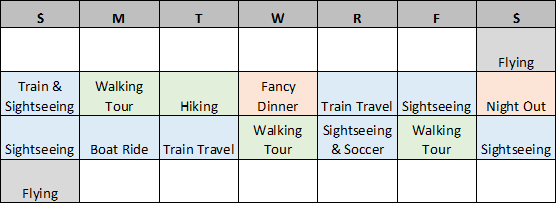
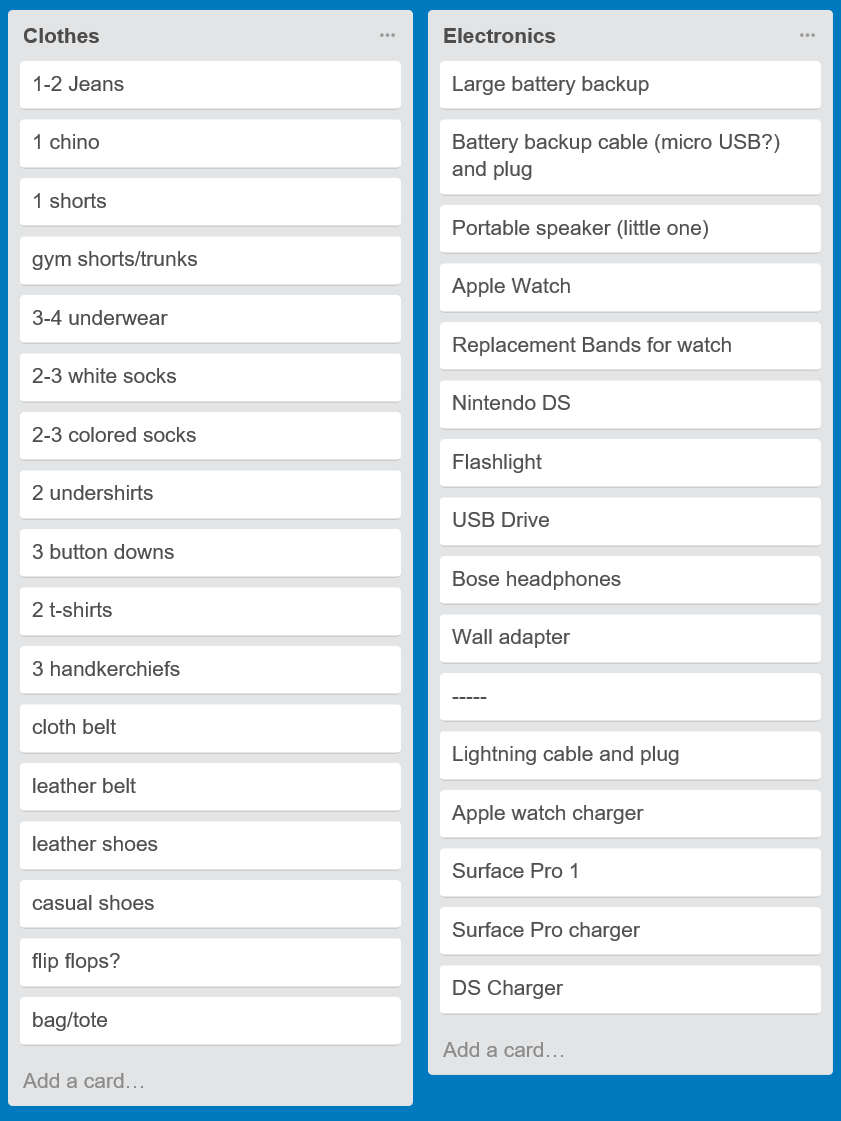
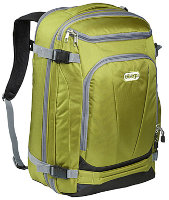
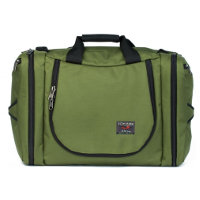
      <![CDATA[<p>I travel pretty often between vacations, conferences and our new Louisville office. I probably travel overnight at last once a month and longer trips happen multiple times a year. Over time, I’ve become <strike>interested</strike> addicted to travel technology and packing efficiency.</p><p>When I started this article, I was flying back from two weeks in Italy where I had just one carry-on bag (more or less… we’ll get to that). This post isn’t about convincing you of the wonders of one bag travel. If you’re interested in why you might want to do this, I highly recommend you take a few minutes to <a target="_blank" rel="noopener" href="http://www.onebag.com/mail.html">go</a> <a target="_blank" rel="noopener" href="http://snarkynomad.com/ultimate-ultralight-travel-packing-list/">read</a> <a target="_blank" rel="noopener" href="http://www.carryology.com/insights/travel/interview-one-bag-one-world/">a few</a> <a target="_blank" rel="noopener" href="https://www.ricksteves.com/travel-tips/packing-light/packing-smart">of these</a>. This post is about:</p><ul><li>What I took and why</li><li>How I packed it</li><li>How it went</li><li>What I would have done differently</li></ul><p>So if that’s interesting dear reader, please stick around. If not, here’s a video of <a target="_blank" rel="noopener" href="https://www.youtube.com/watch?v=DljStQsY80I">baby sloths</a>.</p><h2 id="Planning-Your-Clothing"><a href="#Planning-Your-Clothing" class="headerlink" title="Planning Your Clothing"></a>Planning Your Clothing</h2><p>A traditional packing list is really a list of outfits: “We have X days and so I’ll need X + 2 outfits”. We were leaving for 15 days, so I would probably include 17-19 outfits. The extra outfits would account for more dressy dinners, or more casual outfits (read: shorts) for sightseeing. You might even pack one really nice outfit if you go to a theater or something.</p><div class="center"><img src="/writing/one-bag-travel/example-schedule.png" class="" title="Example Itinerary"></div><p>This is a <strong>TON</strong> of clothing, and there’s no way this will work with carry-on only travel for anyone larger than a child. I’m significantly larger than a child. My clothes are bulky. Even if I plan a laundry day (every city has laundromats), I’d still be talking probably 9-10 outfits. Airline overhead bins are only so big.</p><div class="center"><img src="/writing/one-bag-travel/lots-of-luggage.jpg" class="" title="Too Much Luggage"></div><p>My packing list for this trip is <em>very</em> different. First, I only planned on taking a small handful of each type of item: 2-3 pairs of pants, 4-6 shirts, etc. I’d plan on mixing-and-matching my items to give me some variety. Even more important (and this may be a total deal breaker for you): I’d plan on washing my clothes every single day.</p><h4 style="text-align: center; color: red;">_I'd plan on washing my clothes every single day_</h4><p>This has some implications. I’d have to set aside a small amount of time every night to hand wash whatever needed it. I’d have to live with the fact that my wardrobe wasn’t going to have a ton of variety. I’d also have to pack some detergent and a clothesline. We were staying in 3 cities during this trip so there would be three days (the nights before really) I couldn’t wash things, but otherwise I’d do so every day.</p><p>Most importantly, <strong>all of my clothes need to be able to dry overnight</strong>. Implicitly, this meant taking next to no cotton, and mostly thin and lightweight items. Thankfully, I’m a big guy and am WAY more likely to overheat than be cold, so thin cloths are what I want anyway. Cotton is the enemy here. Good quality synthetics that breathe and are treated for oder resistance (this is important… crap polyester gets stinky) and merino wool are ideal. Cotton blends may be ok.</p><h4 id="Wool"><a href="#Wool" class="headerlink" title="Wool?"></a>Wool?</h4><p>Yes, I said wool when talking about lightweight clothing to stay cool. I’m not kidding. merino wool is insane (and insanely expensive). I suggest <a target="_blank" rel="noopener" href="http://snarkynomad.com/why-merino-wool-t-shirts-are-the-best-travel-t-shirts/">going here to learn more</a>. I took <a target="_blank" rel="noopener" href="http://www.icebreaker.com/en/mens-underwear/anatomica-boxers-w-fly/100472_WS.html?dwvar_100472__WS_color=403">wool underwear</a>, <a target="_blank" rel="noopener" href="http://www.smartwool.com/shop/men-socks-run/mens-phd-run-ultra-light-no-show-socks-sw0sw147?variationId=122">athletic socks</a> and <a target="_blank" rel="noopener" href="http://www.icebreaker.com/en/mens-socks/mens-lifestyle-ultra-light-crew-rugby-stripe/101180.html?dwvar_101180_color=401">crew socks</a> from Icebreaker and SmartWool. I’m on my way to replacing <strong>all</strong> of my cotton socks.</p><div class="center"><img src="/writing/one-bag-travel/PolishMerino.jpg" class="" title="Merino Sheep"></div><h4 id="Travel-Specific-Clothing"><a href="#Travel-Specific-Clothing" class="headerlink" title="Travel Specific Clothing"></a>Travel Specific Clothing</h4><p>I wear many of my merino items year round because they are so awesome, but I’ve gotten to the point where I own other travel specific items as well. I’ll be writing up specific reviews for many of these but until then, here are some highlights:</p><ul><li><strong><a target="_blank" rel="noopener" href="http://www.prana.com/bridger-jean.html">prAna Bridger Jeans</a></strong> - I bought a pair of these at REI on a whim once because they were super comfortable. They’re also a poly&#x2F;cotton blend that just about dries overnight. Sadly, they don’t have zipper pockets.</li><li><strong><a target="_blank" rel="noopener" href="http://shop.bluffworks.com/collections/chino-tailored-fit">Bluffworks Chinos</a></strong> - I just bought these for this trip and they are amazing. They’re very comfortable, dry in about 6 hours after a hand wash, and have 3 hidden pockets which are great for stuff you don’t want to get pick pocketed. Like reviews elsewhere state, I do wish the pockets were deeper.</li><li><strong><a target="_blank" rel="noopener" href="http://www.rohan.co.uk/mens-travel-and-outdoor-shirts-Fenland-Shirt-ss16?ocode=03894D86">Rohan Fenland Shirt</a></strong> - I just bought this as well. It’s a nice button down with a hidden zipper pocket on the chest. I’m in full agreement with <a target="_blank" rel="noopener" href="http://snarkynomad.com/bluffworks-jeans-review-high-tech-performance-but-casual-style/">Snarky Nomad</a> about wanting travel clothes that don’t look like travel clothes.</li><li><strong>Haines Undershirts</strong> - I lucked into a pack of these at Target. Who knew they made undershirts that weren’t cotton? These dry overnight quite well. The only ones they list on their site have cotton, but the ones I found were Rayon&#x2F;Polyester.</li><li><strong><a target="_blank" rel="noopener" href="http://www.uniqlo.com/us/product/men-airism-v-neck-t-shirt-short-sleeve-162848.html#69">Uniqlo Airism Undershirt</a></strong> - This was a test purchase and I loved it. It dried in a matter of hours. I probably could have gotten by with just this one undershirt and wore it every day.</li><li><strong>Patagonia Shorts</strong> I bought these at a cool store called MEC in Winnipeg. It’s like REI but Canadian. They dry really fast and like most technical clothes, pack really slim.</li></ul><h4 id="The-First-List"><a href="#The-First-List" class="headerlink" title="The First List"></a>The First List</h4><div class="center">    <a href="/writing/one-bag-travel/initial-packing-list.png" target="_blank">        <img src="/writing/one-bag-travel/initial-packing-list.png" height="561" width="421">    </a></div><h2 id="Packing-It-All-Up"><a href="#Packing-It-All-Up" class="headerlink" title="Packing It All Up"></a>Packing It All Up</h2><p>If you are only going to use a carry-on, you have to make sure it actually qualifies as a carry-on. For US airlines, this generally means a 40-45L bag. Regional jets (which I always have to take from CMH to a real airport) often won’t even fit those, so you  may have to gate check until you get a hub.</p><p>This bag needs to hold your clothes, toiletries and gadgets while being easy to carry or haul around. Both from a capacity standpoint and from a portability standpoint, I prefer backpacks to roller bags for a couple of reasons:</p><ol><li>Roller bags sacrifice some part of their capacity to structural items (my estimate is that this is often 15-25%).</li><li>A bag you pull behind you is much less convenient for moving around crowded train stations or buses than one you wear.</li></ol><p>I now own three different full size carry-on travel backpacks: an <a target="_blank" rel="noopener" href="http://www.ebags.com/product/ebags/mother-lode-tls-weekender-convertible/143101">eBags TLS Mother Lode Weekender Convertible</a>, an <a target="_blank" rel="noopener" href="http://www.ospreypacks.com/us/en/product/farpoint-40-FARPNT40.html">Osprey Farpoint 40</a>, and a <a target="_blank" rel="noopener" href="https://www.tombihn.com/products/aeronaut-45">Tom Bihn Aviator 45</a>. I just bought the Tom Bihn for this trip and absolutely love it, but I’ll save that review for another time.</p><div class="center"><a href="http://www.ebags.com/product/ebags/mother-lode-tls-weekender-convertible/143101" target="_blank"><img src="/writing/one-bag-travel/ebags-weekender.jpg" alt="eBags TLS Mother Lode Weekender"></a><a href="http://www.ospreypacks.com/us/en/product/farpoint-40-FARPNT40.html" target="_blank"><img src="/writing/one-bag-travel/osprey-farpoint.jpg" alt="Osprey Farpoint 40"></a><a href="https://www.tombihn.com/products/aeronaut-45" target="_blank"><img src="/writing/one-bag-travel/tom-bihn.jpg" alt="Tom Bihn Aviator 45"></a></div><p>Next, you need to figure out how to pack the items inside of your luggage. I’ve experimented with <a target="_blank" rel="noopener" href="http://www.onebag.com/pack.html">bundle packing</a>, <a target="_blank" rel="noopener" href="http://shop.eaglecreek.com/packit__garment_folder_large/d/1324_c_211_cl_2562">packing folders</a>, <a target="_blank" rel="noopener" href="http://www.ebags.com/product/ebags/slim-packing-cubes-3pc-set/107842">packing cubes</a>, <a target="_blank" rel="noopener" href="http://lifehacker.com/5533463/rolling-clothes-prevents-wrinkles-and-saves-packing-space">rolling</a>, etc. I’ve found that packing folders are generally too bulky (although I like them for overnight business trips) and that bundle packing and rolling is too messy and annoying. I’ve settled on packing cubes to help compress my items but also keep them organized while in transit and once in a hotel or apartment. I ended up taking a few of the <a target="_blank" rel="noopener" href="http://www.ebags.com/product/ebags/slim-packing-cubes-3pc-set/107842">eBags slim cubes</a> and <a target="_blank" rel="noopener" href="http://shop.eaglecreek.com/packit-cube/d/1321">one larger one of these</a>.</p><h4 id="Laying-Everything-Out"><a href="#Laying-Everything-Out" class="headerlink" title="Laying Everything Out"></a>Laying Everything Out</h4><p>It’s now time to lay out everything you want to take with the bags&#x2F;cubes&#x2F;etc you want to pack it all in.</p><div class="center">    <a href="/writing/one-bag-travel/stuff-unpacked.jpg" target="_blank">        <img src="/writing/one-bag-travel/stuff-unpacked-400x214.jpg" alt="All of my stuff">    </a></div><p>Then it’s time to start removing items. I’ve done this enough times that I can pretty well eyeball what will and won’t fit in my luggage now, but sometimes I still do a test pack. My goal is to get everything in my luggage while still having 5-10% of the capacity left over. I shouldn’t have to compress the heck of out everything to close the bag. I’ll cull things from my list until I get there.</p><p>In this case, I think I only removed the portable speaker, thinking we wouldn’t really use it. I didn’t miss it.</p><h4 id="Packing-the-Bag"><a href="#Packing-the-Bag" class="headerlink" title="Packing the Bag"></a>Packing the Bag</h4><p>One thing most travel reviews don’t cover is how to actually fit all the stuff in the cubes and luggage you have. I won’t go into every single detail, but here’s my general strategy. I put together packing cubes by types of clothing. For t-shirts&#x2F;undershirts, I <a target="_blank" rel="noopener" href="https://www.youtube.com/watch?v=b5AWQ5aBjgE">quick fold</a> and then roll them up. I fit all of these rolled shirts next to each other in a cube.</p><p>For colored shirts, I fold them a little neater and stack them a bit more gently in their own cube. I do the same for jeans.</p><p>I pack another cube full of odds and ends including the clothesline, power adapter, cables, etc. I then start placing these cubes inside the center area of my luggage. I use a layer on top and bottom to pad my delicate electronics (in this case an old Surface Pro 1). My toiletries go into a pouch that I shove into the remaining space. There is enough space around the edges and corners to tuck in any last-minute items. This includes a couple of packable bags: a duffel bag for hauling purchases back with us (I use it as my personal item on the way back) and a backpack for day trips.</p><p>My extra pair of shoes (stuffed full of socks) goes in one end of the luggage. My airplane entertainment bag with my battery backup, DS, snacks, etc goes in the other. I also put my liquids bag here for ease of access.</p><p>I also attach little locks to all the zippers to make it a little inconvenient for someone to try to unzip them on a crowded bus to get something out, and to help keep the cleaning staff at hotels honest. We’ve had things stolen before so it doesn’t hurt to add a little extra security.</p><p>And that’s it. I don’t carry a personal item or anything else. When I hop on the plane, I pull my entertainment pouch out and stick it under the seat and put the bag in the overhead bin. When deplaning, I reverse the process.</p><div class="center">    <a href="/writing/one-bag-travel/stuff-packed.jpg" target="_blank">        <img src="/writing/one-bag-travel/stuff-packed-400x210.jpg" alt="All of my stuff">    </a></div><h2 id="How-Did-It-Go"><a href="#How-Did-It-Go" class="headerlink" title="How Did It Go?"></a>How Did It Go?</h2><p>This is the first trip where I’ve intentionally recorded what got warn, what didn’t, and what I wish I had packed. In general, I packed more than I needed (everyone does) but I did miss a couple of items. Fortunately, Italy has stores and the travel saying of “Pack half as much stuff and twice as much cash” works in a pinch.</p><p>As is our tradition, we went to a local soccer game and bought some jerseys as souvenirs. We picked up a few other items on the trip as well. On the way back, I dumped my jacket, some clothes and my entertainment stuff in a collapsible duffel and used it as my carry on. So for the last day only, I had to carry something in my hands. Not too shabby.</p><h4 id="The-Excess"><a href="#The-Excess" class="headerlink" title="The Excess"></a>The Excess</h4><p>There were a number of clothing items I didn’t wear at all. These include:</p><ul><li>My second set of prAna jeans. These were completely unnecessary.</li><li>Flip flops were a waste of space. I never even unpacked them.</li><li>My 3rd undershirt. I honestly could have gotten by with the Airism every day because it dried so fast, but a spare isn’t bad.</li><li>My backup cotton socks. I took a higher cut pair of socks in case either of my shoes started irritating my ankles while wearing no-show socks. This didn’t happen.</li><li>My 2nd t-shirt. I found myself much more comfortable in button downs in Italy and only wore a t-shirt a few times. One would have been enough.</li><li>My 4th pair of underwear. I could have probably gotten by with 2, but the 3rd pair was handy one time when I didn’t have time to wash&#x2F;dry the others due to a transit day.</li><li>The battery was total overkill for this trip. I never drained it past 60% and could have taken a lighter one.</li></ul><p>I could have actually decreased the number of button down shirts I took as well, but I think I would have missed the variety.</p><h4 id="What-I-Missed"><a href="#What-I-Missed" class="headerlink" title="What I Missed"></a>What I Missed</h4><p>I really needed a layer that was heavier (and a little fancier) than just my button downs, but not as heavy as my full jacket. Before the trip, I went to REI looking for a technical 1&#x2F;2 or 1&#x2F;4 zip layer that would look nice over a collared shirt but didn’t have any luck. I ended up buying a cotton blazer from a GAP-like store in Rome that worked out well enough and was cheap (on sale). You don’t wash a blazer much anyway so cotton was fine there. I’ll still look for a technical jacket (<a target="_blank" rel="noopener" href="http://www.rohan.co.uk/mens-travel-and-outdoor-jackets-District-Jacket?ocode=04281121">like this perhaps</a>) in the future.</p><p>Travel writers often talk about packing more layers and not heavy layers. I thought I had done a good job here, but now I see where I could improve.</p><p>I also wished for a less clunky plug adapter solution. The plug adapter I have is a universal one I bought at Target a few years back (<a target="_blank" rel="noopener" href="http://www.amazon.com/Insten-Universal-Travel-Charger-Adapter/dp/B000YN01X4/ref=sr_1_1?ie=UTF8&qid=1462155903&sr=8-1&keywords=Universal+Plug+Adapters">like this one</a>). It would work in Asia, Eastern Europe, etc, but I wasn’t going to any of those places. A smaller adapter that didn’t dangle precariously from the wall would have been nice. I would also have liked to have a USB adapter with more than two ports.</p><p>Finally, I probably didn’t need my Surface. I took it since it’s the smallest computing device I own, but I likely could have gotten by without it. If I ever buy an iPhone 6 Plus, I may just get a bluetooth keyboard.</p><p><em>Bonus thought</em>: It might be possible to have a tailor add a hidden zipper to one of the prAna jeans pockets. This would make them perfect. I’ll have to find out how much that costs.</p><h2 id="Is-It-Worth-It"><a href="#Is-It-Worth-It" class="headerlink" title="Is It Worth It?"></a>Is It Worth It?</h2><p>So is the extra work (and cost for technical gear) worth it? I think so. We booked our own itinerary and took regional trains to get from place to place. Once in cities, we could just hop on buses and knew there would be enough space for our bags.</p><p>Knowing you have to fit anything you buy into your baggage helps limit purchases. Knowing you have to carry it helps even more. It’s easy to unpack and repack in every hotel too, so a trip with more than 3 locations would benefit even more.</p><p>So it’s worth it for me. I can’t say it’s right for everyone. I can say I’m wondering whether I can take an even smaller bag.</p><p>Ciao.</p><p class="edit-note">Lightly edited in 2026.</p>]]>
    </content>
    <id>https://jaredfaris.com/writing/one-bag-travel/</id>
    <link href="https://jaredfaris.com/writing/one-bag-travel/"/>
    <published>2016-05-11T12:37:00.000Z</published>
    <summary>
      <![CDATA[<p>I travel pretty often between vacations, conferences and our new Louisville office. I probably travel overnight at last once a month and]]>
    </summary>
    <title>One Bag Travel</title>
    <updated>2026-10-16T21:50:09.032Z</updated>
  </entry>
  <entry>
    <author>
      <name>Jared Faris</name>
    </author>
    <category term="technology" scheme="https://jaredfaris.com/tags/technology/"/>
    <content>
      <![CDATA[<p><em>This post has been a loooong time coming and is the follow up to my original <a href="/writing/they-vs-we/">They Vs. We</a> post in 2014. Sorry! I highly recommend reading that first and then coming back to this.</em></p><p>I’ve been paying much closer attention to those around me at work and in the community. I’ve become increasingly convinced that “We” vs “They” is a very powerful indicator of how closely someone identifies to the team or community they are in; “they” is a really bad sign in anyone other than a brand new team member.</p><p>From the last post:</p><table><thead><tr><th><div style="text-align: left;">We</div></th><th><div style="text-align: left;">They</div></th></tr></thead><tbody><tr style="vertical-align: top;"><td>"_We_" implies that you're one of the team. The goals of the team are your goals. The risks the team faces are your risks. You're engaged. </td><td>"_They_" implies you're not connected to the team. You're an outsider who isn't committed.</td></tr></tbody></table><h3 id="That’s-all-great-so-what-can-I-do"><a href="#That’s-all-great-so-what-can-I-do" class="headerlink" title="That’s all great, so what can I do?"></a>That’s all great, so what can I do?</h3><p>I’ve written and deleted multiple posts worth of content at this point because either my opinions have changed, or the things I wrote seemed like common sense. Instead of giving you a bulleted list of the things your team needs to do to improve, I’ve come up with on single thing that you should focus on. Please pardon my language.</p><div style="text-align: center;"><span style="color: red; font-size: x-large;">**GIVE A SHIT**</span></div><div style="text-align: left;"></div><div style="text-align: left;">The more I think about this, the more I've come to believe that the <u>single most important thing</u> a leader can do to help his or her team is simply <u>care about the team and the people in it.</u>&nbsp;Leaders who care about the needs, wants and challenges of their team members seem to naturally build healthier teams.</div><div style="text-align: left;"></div><div style="text-align: left;">This is harder than it seems. You probably don't have enough time or emotional energy to become best friends with everyone you have to work with. Caring about people can be exhausting, and teams can grow much faster than personal relationships can scale. So what do you do?</div><div style="text-align: left;"></div><h4 id="First-pay-attention-to-problems"><a href="#First-pay-attention-to-problems" class="headerlink" title="First, pay attention to problems"></a>First, pay attention to problems</h4><div>Make it clear that you'll listen and try to help whenever someone is having a problem. Sometimes you can fix little things that have a big impact. However, sometimes people will want something you can't give them, or be struggling with a weight you can't remove. Sometimes you will have to tell people "No".</div><div></div><div>Regardless of the solution (or lack), you'll get a lot of credit for listening and caring.</div><div></div><h4 id="Second-share-how-you-make-decisions"><a href="#Second-share-how-you-make-decisions" class="headerlink" title="Second, share how you make decisions"></a>Second, share how you make decisions</h4><div>People have a lot of capacity for going along with decisions they don't agree with if they understand why they were made. On the flip side, people can be extremely resistant when they feel like a bad decision is being forced on them.</div><div></div><div>If you have to tell someone "No", or make a decision people may not like, give them insight into why. You may be surprised with how they empathize with your situation and see your point of view.</div><div></div><h4 id="Third-make-“team”-a-stated-priority"><a href="#Third-make-“team”-a-stated-priority" class="headerlink" title="Third, make “team” a stated priority"></a>Third, make “team” a stated priority</h4><div>Make it clear that "we" is important, and ask your team members to help grow the team as whole. They may be aware of problems that you don't know about, or see simple changes that can improve the health of the team.</div><div></div><div>It's a bit circular, but you can strengthen your team and pull people into it by making them responsible for strengthening it in the first place.</div><div></div><h3 id="So-that’s-it"><a href="#So-that’s-it" class="headerlink" title="So that’s it"></a>So that’s it</h3><div>That's all I have. I had hoped to provide a lot more insight, but the more I think about it, the more I think it's pretty simple.<p>Please tell me in the comments if you disagree!</div></p>]]>
    </content>
    <id>https://jaredfaris.com/writing/they-vs-we-part-2/</id>
    <link href="https://jaredfaris.com/writing/they-vs-we-part-2/"/>
    <published>2015-10-29T03:42:45.000Z</published>
    <summary>
      <![CDATA[<p><em>This post has been a loooong time coming and is the follow up to my original <a href="/writing/they-vs-we/">They Vs. We</a> post in 2]]>
    </summary>
    <title>They Vs. We (Part 2)</title>
    <updated>2026-10-16T21:50:09.036Z</updated>
  </entry>
  <entry>
    <author>
      <name>Jared Faris</name>
    </author>
    <category term="technology" scheme="https://jaredfaris.com/tags/technology/"/>
    <content>
      <![CDATA[<p>I’m going to start this blog post with a story. Please stay with me for a minute.</p><p>I went to the grocery store last week to buy groceries as one does. While I was there, I cleared the meat counter out of an item.</p><p>After she packaged up my order, the woman behind the counter asked if I’d like anything else. She seemed pretty grumpy and unhappy to be there. I made the lame joke that “<em>I’d leave some for other shoppers</em>“ and two things happened:</p><ol><li>She didn’t find my bad joke funny.</li><li>She responded “<em>**They **probably have more in the back.</em>“<div>The joke wasn’t funny but her use of <em><strong>they</strong></em>&nbsp;got me thinking.</div><div></div></li></ol><h3 id="Who-are-“They“"><a href="#Who-are-“They“" class="headerlink" title="Who are “They“?"></a>Who are “<span style="font-style: italic;">They</span>“?</h3><div>Now, she could have been referring to a different team that is in charge of stocking the meat counter... I don't know. From her manner, I assumed by "_they_" she meant the grocery store company.&nbsp;</div><div></div><div>This got me thinking about why she didn't say "_we_" instead.</div><table><thead><tr><th><div style="text-align: left;">We</div></th><th><div style="text-align: left;">They</div></th></tr></thead><tbody><tr style="vertical-align: top;"><td>"_We_" implies that you're one of the team. The goals of the team are your goals. The risks the team faces are your risks. You're engaged. </td><td>"_They_" implies you're not connected to the team. You're an outsider who isn't committed.</td></tr></tbody></table><h3 id="When-is-it-“We“-or-“They“"><a href="#When-is-it-“We“-or-“They“" class="headerlink" title="When is it “We“ or “They“?"></a>When is it “<em>We</em>“ or “<em>They</em>“?</h3><div>When I've joined a new team, I've noticed that I start with "_you_" or "_they_" and then after some period of time start saying "_we_". I've never thought about how long the time is. It's probably been somewhere between a couple of weeks and a couple of months. A lot of this is due to the people on the team and its leadership. They got me engaged and made me feel like a critical part of the "_we_".</div><div></div><div>When I joined HMB, it only took me a couple of weeks (at the most) to make the transition. Some of this was due to my bosses but a **whole lot more** was due to the attitudes of the entire team. Everyone was thinking about the "_we_" in most everything they did.&nbsp;Thinking about this now, I can see how priceless it was and is.</div><div></div><div>That may not be the case for the woman at the grocery store. Maybe she hates her job but it's the only way she can pay the bills. Maybe her leaders and team are failing her.<p>I’ve got some thoughts about how a team can improve this situation. I’ll save those for the next post.</div><div></p><h3 id="Question"><a href="#Question" class="headerlink" title="Question"></a>Question</h3></div><div>What about you? How long has it taken you to go from "_they_" to "_we_" at your current job? How about previous jobs? What was the main factor in that duration?</div>]]>
    </content>
    <id>https://jaredfaris.com/writing/they-vs-we/</id>
    <link href="https://jaredfaris.com/writing/they-vs-we/"/>
    <published>2014-07-24T03:32:24.000Z</published>
    <summary>
      <![CDATA[<p>I’m going to start this blog post with a story. Please stay with me for a minute.</p>
<p>I went to the grocery store last week to buy gro]]>
    </summary>
    <title>They Vs. We</title>
    <updated>2026-10-16T21:50:09.036Z</updated>
  </entry>
  <entry>
    <author>
      <name>Jared Faris</name>
    </author>
    <category term="technology" scheme="https://jaredfaris.com/tags/technology/"/>
    <content>
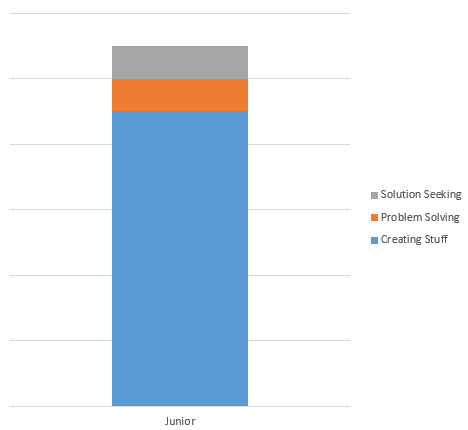
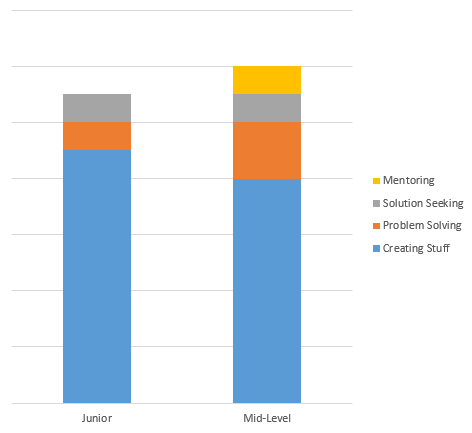
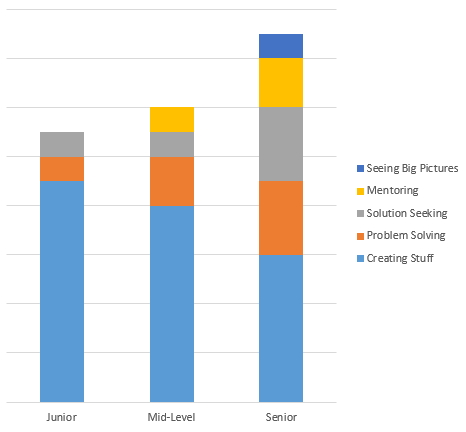
      <![CDATA[<p>There’s (hopefully) a good title to get attention. I’ve been spending some time thinking about this lately. Part of being involved in the hiring process at <a target="_blank" rel="noopener" href="http://www.hmbnet.com/">HMB</a> is thinking about who people are, how well they will do in the role we’re considering them for, and how happy they’ll be doing it.</p><p>What makes a good programmer? <strong>Excitement</strong>. That’s pretty much it no matter if you’re talking about a junior dev or a senior architect&#x2F;tech lead. The difference is: excitement about what.</p><h1 id="Good-Junior-Developers"><a href="#Good-Junior-Developers" class="headerlink" title="Good Junior Developers"></a>Good Junior Developers</h1><p>A good junior dev stands out from his or her peers because of an excitement for creating stuff. Whether websites, desktop apps, something on a phone, or whatever, a good junior developer says things like:</p><div style="font-style: italic; text-align: center;">"OMG OMG I just made this thing turn blue. Hey guys, check thi... HOLY CRAP JQUERY!!!"</div><div class="center"><img src="/writing/what-makes-a-good-developer/holy-crap-sackboy.jpg" class="" title="Sackboy"></div><p>Most really good junior devs are just discovering how awesome it is to make something they can interact with. They get excited about tactical problem solving, and designing more strategic solutions, but it’s definitely secondary:</p><div class="center"><img src="/writing/what-makes-a-good-developer/junior.png" class="" title="Junior Developer work breakdown"></div><p>When you’re a new developer, it’s all about learning new ideas by building stuff. You don’t know what you don’t know, and you don’t know a lot! Every new concept should be exciting and feel like it’s life changing.</p><p>I’m sure there are exceptions, but I’m a bit leery of someone fresh out of school who says they are excited about middleware. There is a subset of really good junior devs who are hardcore code geeks and want to build languages and databases. These devs may turn out to be awesome one day, but in most environments their first few years are going to be difficult. Be excited about building stuff!<br>Junior developers are great for a team that needs energy, but they need more experienced people to act as anchors.</p><h1 id="Good-Mid-Level-Developers"><a href="#Good-Mid-Level-Developers" class="headerlink" title="Good Mid-Level Developers"></a>Good Mid-Level Developers</h1><p>Mid-level developers should have a wider spread of things that excite them. Part of this is just a developer getting exposed to more stuff, and getting good at new types of tasks. Another part is simple boredom; if you’ve built a widget 9 times now it’s not as exciting to build it the tenth time. A good mid-level developer sounds like:</p><div style="font-style: italic; text-align: center;">"We took that library we figured out last year, but this year used it to build a giant killer robot. I’m sure we’ve worked out the bugs." <span style="font-size: .9em; vertical-align: super;">1</span></div>Mid-level developers start thinking about business problems and no longer see everything as a code problem. They realize solving problems is what we do, not writing code. However, code is still what they’re focusing on:<div class="center"><img src="/writing/what-makes-a-good-developer/midlevel.png" class="" title="Midlevel developer work breakdown"></div><p>A mid-level dev shouldn’t have lost his or her passion for building things by any means, but that developer should start seeing the big picture. They’ll still underestimate how long things will take, and they’ll dive down the first rabbit hole they see.</p><p>These developers are incredibly valuable to a team with a senior person who can keep them focused and engaged. Without this focus, they tend to overdo everything. A junior developer doesn’t know what TDD is. A mid-level developer wants to TDD everything, all the time!</p><h1 id="Good-Senior-Developers"><a href="#Good-Senior-Developers" class="headerlink" title="Good Senior Developers"></a>Good Senior Developers</h1><p>The old gray beards (or non-beards as the case may be) of software are an extremely important group; many organizations underestimate how valuable they are or even actively discriminate against them if they’re old enough. That’s another blog post though.</p><div class="center"><img src="/writing/what-makes-a-good-developer/Gandalf_the_Grey.jpg" class="" title="Gandalf the Grey">The beard is full of knowledge</div><p>A good senior developer can build things and still likes to do so, but is incredibly important to a team because he or she provides direction, stability, and the occasional gut feeling that something’s not right. Sometimes the only way to see a problem bus coming is to have been hit by it in the past.</p><div style="font-style: italic; text-align: center;">"I’m pretty sure the giant killer robot is a bad idea. We did this 20 years ago in COBOL and almost lost Canada. Let’s build a web app instead."</div>A really good senior developer can keep up with the youngs when it comes to coding, but really provides value when it comes to finding solutions. They live to understand systems and figure out how to align the key pieces:<div class="center"><img src="/writing/what-makes-a-good-developer/senior.png" class="" title="Senior developer work breakdown"></div><p>A good senior developer or two on a team helps teach the juniors how to do new things, and keep the mid-level folk from going overboard smacking everything with their technology hammers. They know when to use tools, and when not to. They realize when code isn’t the solution and find other ways to solve problems.</p><h1 id="Conclusion"><a href="#Conclusion" class="headerlink" title="Conclusion"></a>Conclusion</h1><p>The big difference between a great senior and junior developer is big picture, strategic stuff. In either case, a good developer is excited about building things and solving problems. With more experience, the breadth of things they get excited about should increase.</p><p>Do you agree or disagree? Let me know how I’m wrong in the comments :)</p><p><em>1. You should always have 100% test coverage of target identification code. You really don’t want to learn this the hard way.</em></p>]]>
    </content>
    <id>https://jaredfaris.com/writing/what-makes-a-good-developer/</id>
    <link href="https://jaredfaris.com/writing/what-makes-a-good-developer/"/>
    <published>2013-05-10T20:00:00.000Z</published>
    <summary>
      <![CDATA[<p>There’s (hopefully) a good title to get attention. I’ve been spending some time thinking about this lately. Part of being involved in the]]>
    </summary>
    <title>What Makes A Good Developer?</title>
    <updated>2026-10-16T21:50:09.038Z</updated>
  </entry>
  <entry>
    <author>
      <name>Jared Faris</name>
    </author>
    <category term="developers" scheme="https://jaredfaris.com/tags/developers/"/>
    <category term="development" scheme="https://jaredfaris.com/tags/development/"/>
    <category term="languages" scheme="https://jaredfaris.com/tags/languages/"/>
    <category term="people" scheme="https://jaredfaris.com/tags/people/"/>
    <category term="technology" scheme="https://jaredfaris.com/tags/technology/"/>
    <content>
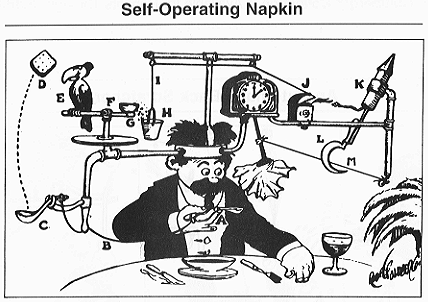
      <![CDATA[<p>I’ve realized that developers exist on a spectrum between code geeks and stuff geeks. <em>Code geeks</em> are those who really enjoy the elegance and challenge of creating new bits of code (plugins, frameworks, entire languages, etc). <em>Stuff geeks</em> are those who enjoy the fulfillment of building final products that they can ‘touch’ and show off. Understanding where on this spectrum your teammates sit (and balancing your team around it) can dramatically improve your output. </p><h3 id="Code-Geeks"><a href="#Code-Geeks" class="headerlink" title="Code Geeks"></a>Code Geeks</h3><p>The extreme code geeks on your team enjoy the act of creating amazing code for the sake of the code. They may build awesome apps but only as a side effect. Give them a simple requirement and they’ll build you a new Lisp. It will be amazing and nobody else on your team will understand it. If they aren’t focused then their attention may wander off after the hard problems are solved but before the feature is finished. </p><div class="center"><img src="/writing/code-geeks-vs-stuff-geeks/rube-goldberg-machine.gif" class="" title="Rube Goldberg Naptkin">Overengineering at its finest</div><p>More moderate code geeks are responsible for most of the cool frameworks we use. They like to build tools but do it in the context of business problems. Their code may not be as elegant but it will actually do things. These code geeks will add a new pattern to your project rather than a new language. </p><h3 id="Stuff-Geeks"><a href="#Stuff-Geeks" class="headerlink" title="Stuff Geeks"></a>Stuff Geeks</h3><p>Moderate stuff geeks love to use frameworks and tools to create end products. They take pride in their code but ultimately see code as a means to an end. They will create a new library if necessary but would love to use an existing one if it’s good enough. </p><table align="center" cellpadding="0" cellspacing="0" class="tr-caption-container" style="margin-left: auto; margin-right: auto; text-align: center;"><tbody><tr><td style="text-align: center;">[![](//farm1.staticflickr.com/48/176998400_e7610d9cd1.jpg)](//farm1.staticflickr.com/48/176998400_e7610d9cd1.jpg)</td></tr><tr><td class="tr-caption" style="text-align: center;">Good enough, ship it![source](//www.flickr.com/photos/akeg/176998400/)</td></tr></tbody></table>Extreme stuff geeks will ship your project before you know you needed it by duct taping a bunch of hacks together. Code elegance to them is like abstract modern art to my kitten. They may see it but it has no emotional impact. <h3 id="Balance"><a href="#Balance" class="headerlink" title="Balance"></a>Balance</h3><p>A healthy team will have developers spread out over this spectrum with the majority somewhere in the middle. A hardcore code geek will need to work with a couple stuff geeks who keep him or her focused on building stuff that’s useful to the team. An extreme stuff geek may make a great prototyper but is going to need a lot of help to not build spaghetti. </p><div class="center"><img src="/writing/code-geeks-vs-stuff-geeks/coder-spectrum.png" class="" title="The coder spectrum">The developer sweet spot</div><p>A team made up of only people in the the middle may be lacking a certain brilliance or not have the ability to rough out a prototype in 10 minutes. You’re team may be pretty solid but only reach 90% of its potential.</p><p>Me? I’m a stuff geek but pretty close to the middle. How about you?</p>]]>
    </content>
    <id>https://jaredfaris.com/writing/code-geeks-vs-stuff-geeks/</id>
    <link href="https://jaredfaris.com/writing/code-geeks-vs-stuff-geeks/"/>
    <published>2013-02-19T17:28:02.000Z</published>
    <summary>
      <![CDATA[<p>I’ve realized that developers exist on a spectrum between code geeks and stuff geeks. <em>Code geeks</em> are those who really enjoy the]]>
    </summary>
    <title>Code Geeks vs Stuff Geeks</title>
    <updated>2026-10-16T21:50:09.032Z</updated>
  </entry>
  <entry>
    <author>
      <name>Jared Faris</name>
    </author>
    <category term="technology" scheme="https://jaredfaris.com/tags/technology/"/>
    <content>
      <![CDATA[<p>I speak at a pretty good number of events (and am always considering more…<a href="/contact/"> hit me up</a>) and really enjoy doing so. At <a target="_blank" rel="noopener" href="http://codemash.org/">Codemash</a>&nbsp;this year I had a few people mention that they would find a post about how to get started speaking at technical events quite useful.</p><div class="center"><img src="/writing/so-you-want-to-be-a-technical-speaker/codemash-audience.jpg" class="" title="Codemash audience">One of the best audiences ever</div><p>Not everyone is going to love or even slightly enjoy speaking in public and that’s fine. However, I think it’s a valuable skill that everyone should at least try to be reasonably proficient at. I’ve put together a few steps that I think any person can follow to help start his or her IT speaking career.</p><h3 id="Attend-Usergroups"><a href="#Attend-Usergroups" class="headerlink" title="Attend Usergroups"></a>Attend Usergroups</h3><p>We’re super lucky in the software development world to have a lot of usergroups available to us. I’ve talked to people in mechanical and electrical engineering who have nothing of the sort. Heck, even our design colleagues don’t have the wealth of options available to us. <u style="font-weight: bold;">Usergroups are the single best place to start your technical speaking.</u>&nbsp;They are a neutral, non-work place full of awesome people.</p><p>So the very first thing you should do if you don’t already is to start attending usergroups. In Columbus, OH alone we have <a target="_blank" rel="noopener" href="http://www.condg.org/">CONDG&nbsp;(.NET)</a>, <a target="_blank" rel="noopener" href="http://coccug.com/">COCCUG (Cloud)</a>, <a target="_blank" rel="noopener" href="http://columbusrb.com/">CRB (Ruby)</a>, <a target="_blank" rel="noopener" href="http://groups.google.com/group/cbusjs">CbusJS (JavaScript)</a>, <a target="_blank" rel="noopener" href="http://www.cojug.org/">COJUG (Java)</a>, <a target="_blank" rel="noopener" href="http://columbus.sqlpass.org/">CBUSPass (SQL)</a>, <a target="_blank" rel="noopener" href="http://thewindowsdeveloperusergroup.com/">Windowsdevug</a>&nbsp;plus probably more that I can’t think of offhand.</p><p>Attend for a few sessions and you’ll see that these groups welcome everyone from polished tech evangelists to people who have an idea and put together their slides the weekend before. Find a usergroup that covers a topic you’re passionate about, attend for a bit, and mention to the organizer(s) that you’d like to contribute.</p><h3 id="Give-A-Short-Talk"><a href="#Give-A-Short-Talk" class="headerlink" title="Give A Short Talk"></a>Give A Short Talk</h3><p>I’ve found that there is generally space for lightning talks (15-20 minutes) at most usergroups at least every few months. Try doing your first talk at one of these since you don’t have to prepare as much content and if you are totally freaked out it’s over quickly.</p><div class="center"><img src="/writing/so-you-want-to-be-a-technical-speaker/codemash-huge-audience.jpg" class="" title="The Pecha Kucha at Codemash">Me being absolutely terrified.</div><p>One thing I might recommend is to find something new and cool that you’re interested in and that nobody else knows about yet. If you present on something new like <a target="_blank" rel="noopener" href="http://html9responsiveboilerstrapjs.com/">HTML9 Responsive Boilerstrap JS</a>&nbsp;you don’t even have to worry about anyone else being an expert and trolling you (which wouldn’t happen anyway). I’ve given talks where I opened with “I don’t really know much about this but it seemed cool so I’m going to share.”</p><h3 id="Find-A-Talk-Based-On-Your-Expertise"><a href="#Find-A-Talk-Based-On-Your-Expertise" class="headerlink" title="Find A Talk Based On Your Expertise"></a>Find A Talk Based On Your Expertise</h3><p>After you’ve given a few short talks start thinking about what you’re really good at and start putting together a full length (45-50 minute) talk based on this. Polish it really well. Maybe get code examples going. Really put a lot into it. Then find someplace to give it. It can likely be at the same usergroup you were attending before but if you want to try something new email the organizers of some driveable usergroups. From Columbus you can easily get to Cleveland, Dayton or Cincinnati and they have great groups.</p><h3 id="If-Your-Still-Interested-Answer-The-Call"><a href="#If-Your-Still-Interested-Answer-The-Call" class="headerlink" title="If Your Still Interested, Answer The Call"></a>If Your Still Interested, Answer The Call</h3><p>At this point you might be happy staying where you are, but if you want to have the real speaking fun then start submitting to various conferences when they open their calls for speakers. At this point you’re a pro so you can do this like a pro. <strong>Come up with a topic and an abstract and only bother making the talk when you get accepted&nbsp;</strong>(Hi organizers who have picked me in the past). Heck, maybe come up with 2 or 3 different topics. Don’t worry if you don’t get picked at your first few conferences. Eventually you will get picked as you refine your topics and get a feel for what the conferences need.</p><h3 id="A-Quick-Guide-To-Abstracts-Or-Time-To-Self-Promote"><a href="#A-Quick-Guide-To-Abstracts-Or-Time-To-Self-Promote" class="headerlink" title="A Quick Guide To Abstracts (Or Time To Self Promote)"></a>A Quick Guide To Abstracts (Or Time To Self Promote)</h3><p>I’ve had the best luck when I come up with an interesting concept, then craft a funny title, and finally write out what I hope to be an interesting abstract. There are going to be a <u style="font-weight: bold;">lot</u>&nbsp;of talks submitted to the conferences you are looking at, and probably a number on the same topic you want to speak about. The key here is to get the reviewer’s attention quickly.</p>]]>
    </content>
    <id>https://jaredfaris.com/writing/so-you-want-to-be-a-technical-speaker/</id>
    <link href="https://jaredfaris.com/writing/so-you-want-to-be-a-technical-speaker/"/>
    <published>2013-02-05T03:05:59.000Z</published>
    <summary>
      <![CDATA[<p>I speak at a pretty good number of events (and am always considering more…<a href="/contact/"> hit me up</a>) and really enjoy doing so.]]>
    </summary>
    <title>So You Want To Be A Technical Speaker?</title>
    <updated>2026-10-16T21:50:09.034Z</updated>
  </entry>
</feed>